

Cloth Fair
A fragment of medieval London whose quaint name hints at its origin

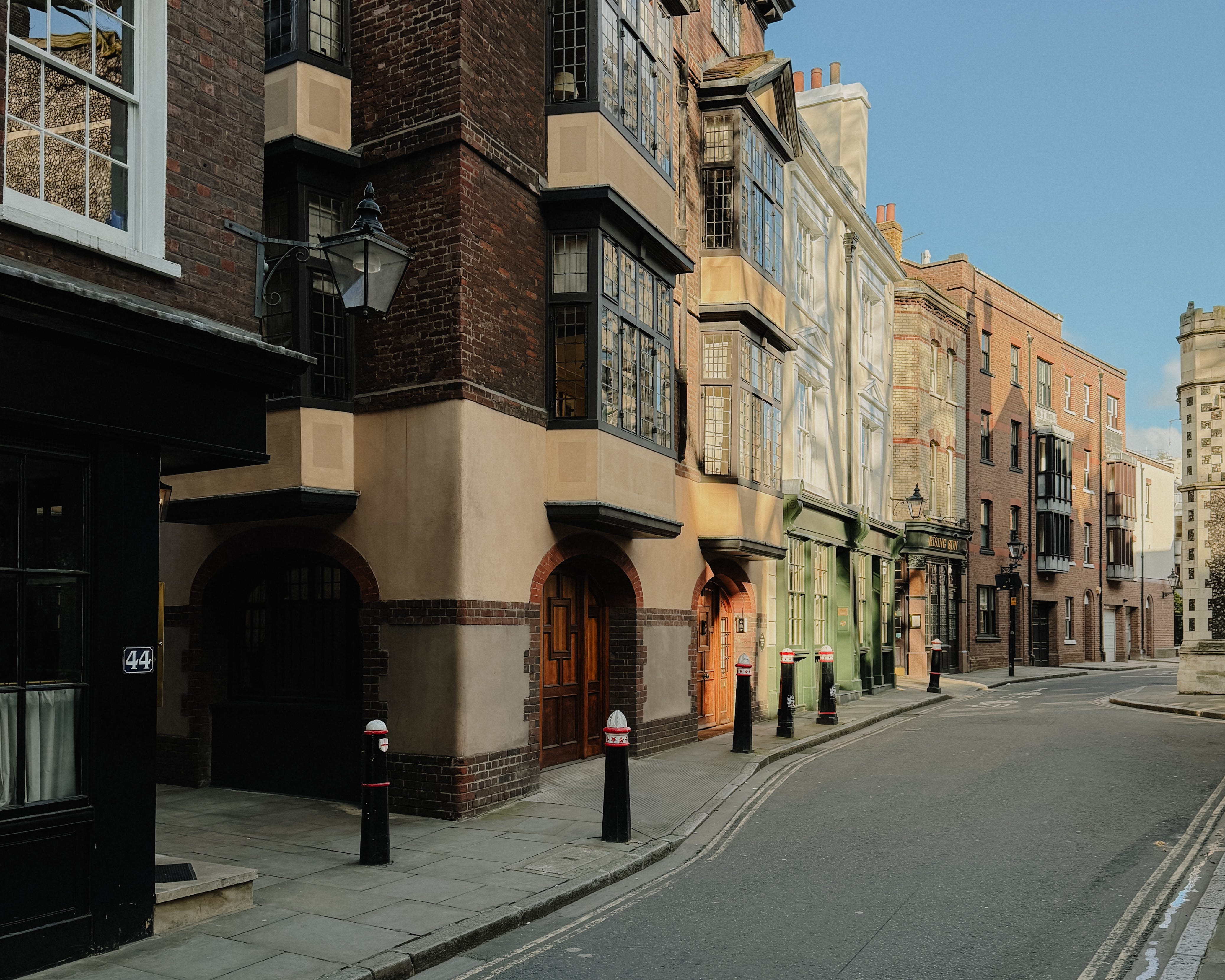
Cloth Fair, a short and easily missed lane tucked behind Smithfield Market and next to the church of St Bartholomew-the-Great, is one of the places in the City of London where the medieval street plan still survives. It’s not picturesque in a deliberate way; rather, it’s the kind of place you might walk through without realising how old it is, although you might notice that the street seems to meander slightly—this is because it follows the boundary of the former medieval priory of St Bartholomew.
A Market Older Than the City Around It
The name itself tells you what this place once was: the site of the annual cloth fair that accompanied Bartholomew’s Fair, one of medieval London’s largest and rowdiest events. For centuries, merchants travelled from across Europe to trade here in wool, silk, linen and velvet. The fair was licensed by royal charter in 1133, pre-dating most of the surrounding streets, and over time it grew into a sprawling carnival—part trade show, part spectacle.
The lanes around Smithfield were then on the outskirts of the walled city, attached to St Bartholomew’s Priory, founded in 1123. The monks made money by renting out plots to traders, and the street that became Cloth Fair was effectively a gated enclave, its entrances closed off at night. That isolation, along with a bit of luck, helped it survive when the Great Fire of 1666 destroyed so much else. Its tight footprint still follows the medieval boundaries of the priory precinct.
Survivors in Brick and Timber
A few buildings along Cloth Fair retain genuine fragments of early construction. The best known is Numbers 41–42, often described as the oldest residential building in the City of London. Its timber frame dates from around 1614, and although much altered, it gives a sense of how London once looked before the brick Georgian terraces took over. Number 43, now owned by the Landmark Trust (who rent it out as a holiday let—wonderful option if you’re planning a visit to London!), is the former home of English poet laureate John Betjeman; its door is in Cloth Court off Cloth Fair.
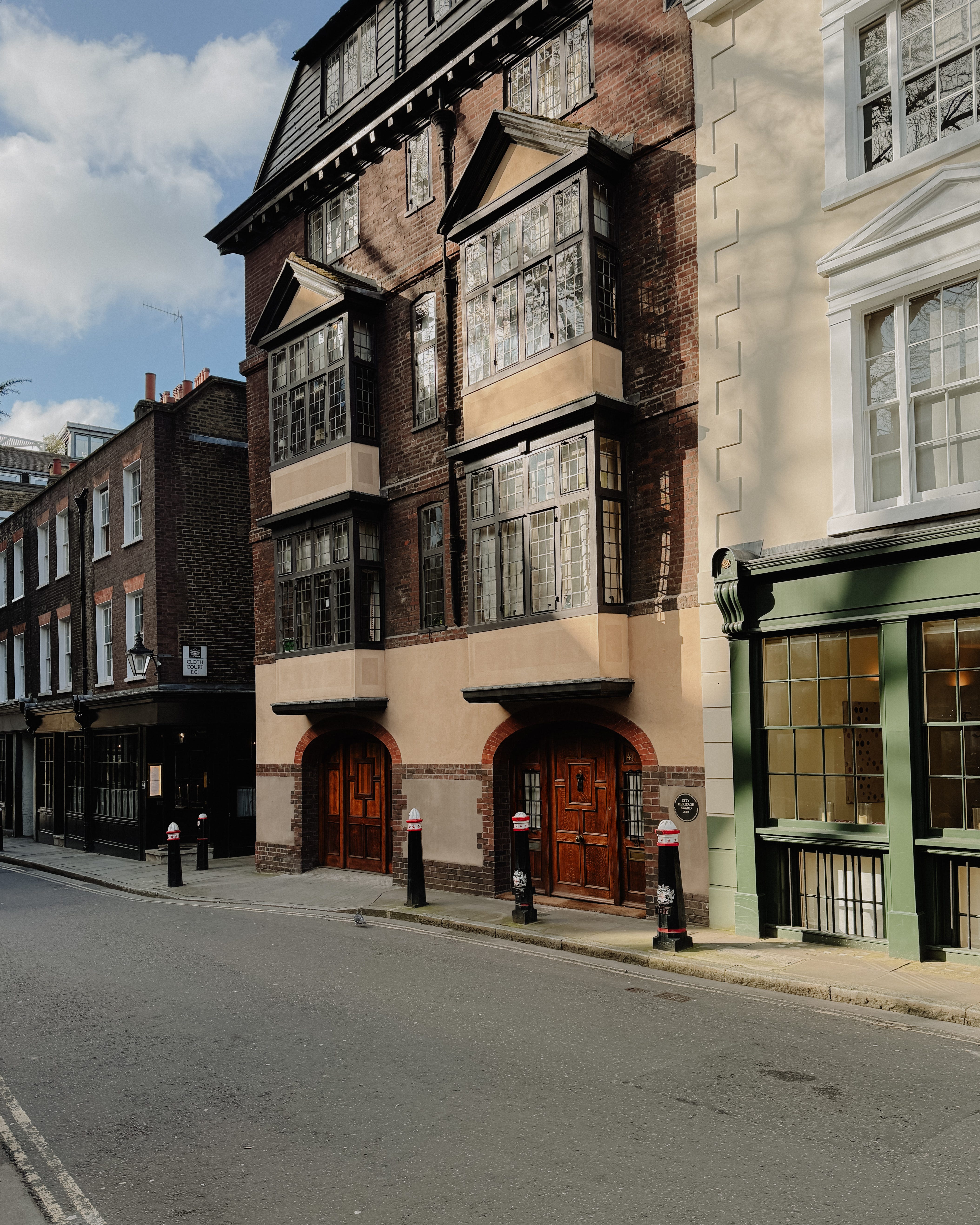
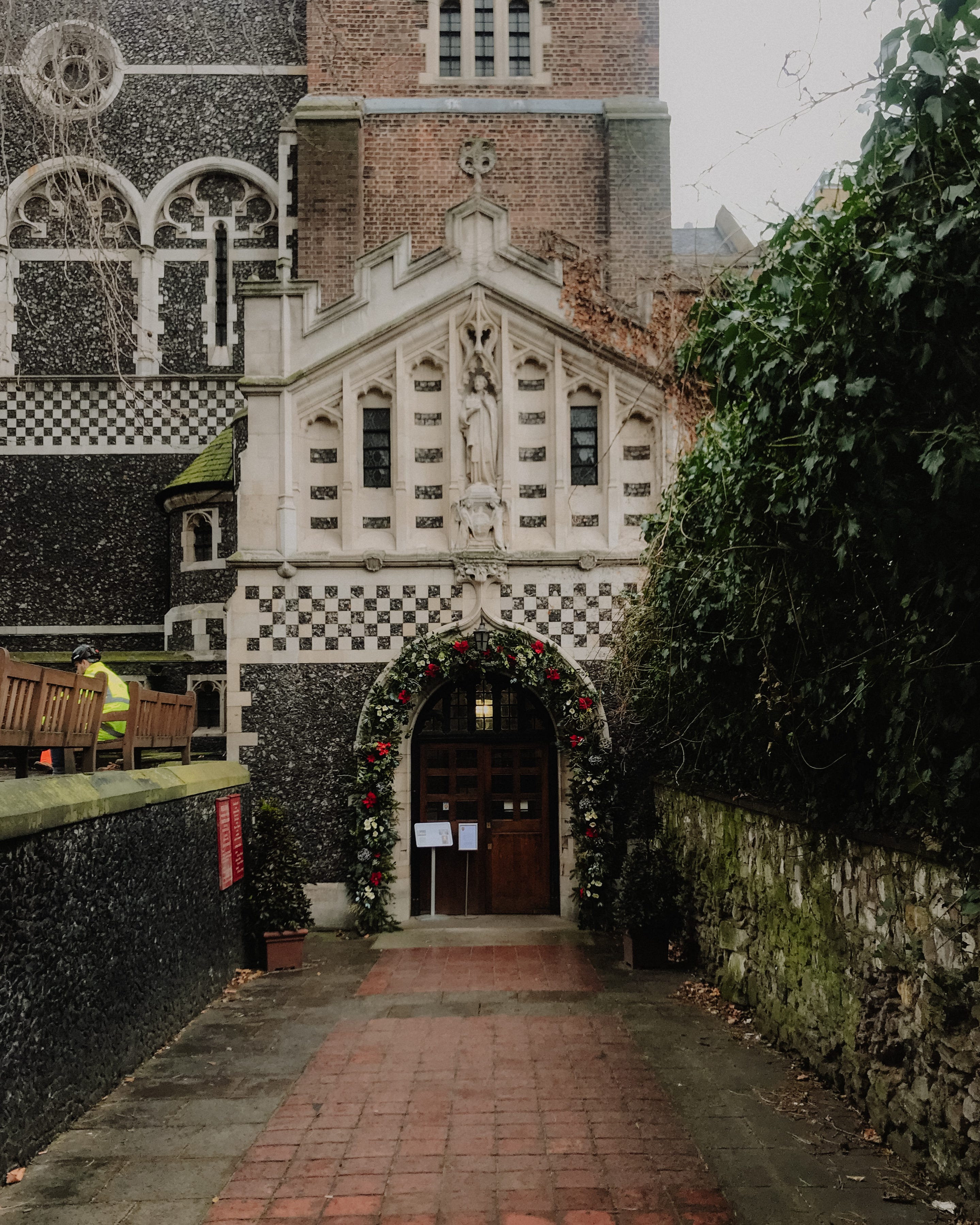
Around it, the street offers a kind of architectural cross-section of London’s development: narrow 17th-century houses rubbing shoulders with 18th-century brick fronts and Victorian warehouses. The upper storeys lean at improbable angles and the windowpanes are slightly uneven, as if time has pushed and pulled at them for centuries. It’s the sort of street that rewards slow walking and close looking, or perhaps a few minutes spent in the old churchyard of St Bartholomew-the-Great that looks out onto Cloth Fair and offers a peaceful spot to sit and soak in the atmosphere.
The church itself is beautiful and well worth a look. It feel into disrepair after the Dissolution of the Monasteries and in the early 1720s, the American patriot Benjamin Franklin worked as a typesetter in a printer’s shop in the Lady Chapel of the church, which at the time was used for commercial purposes. It was eventually restored in the late 19th century.
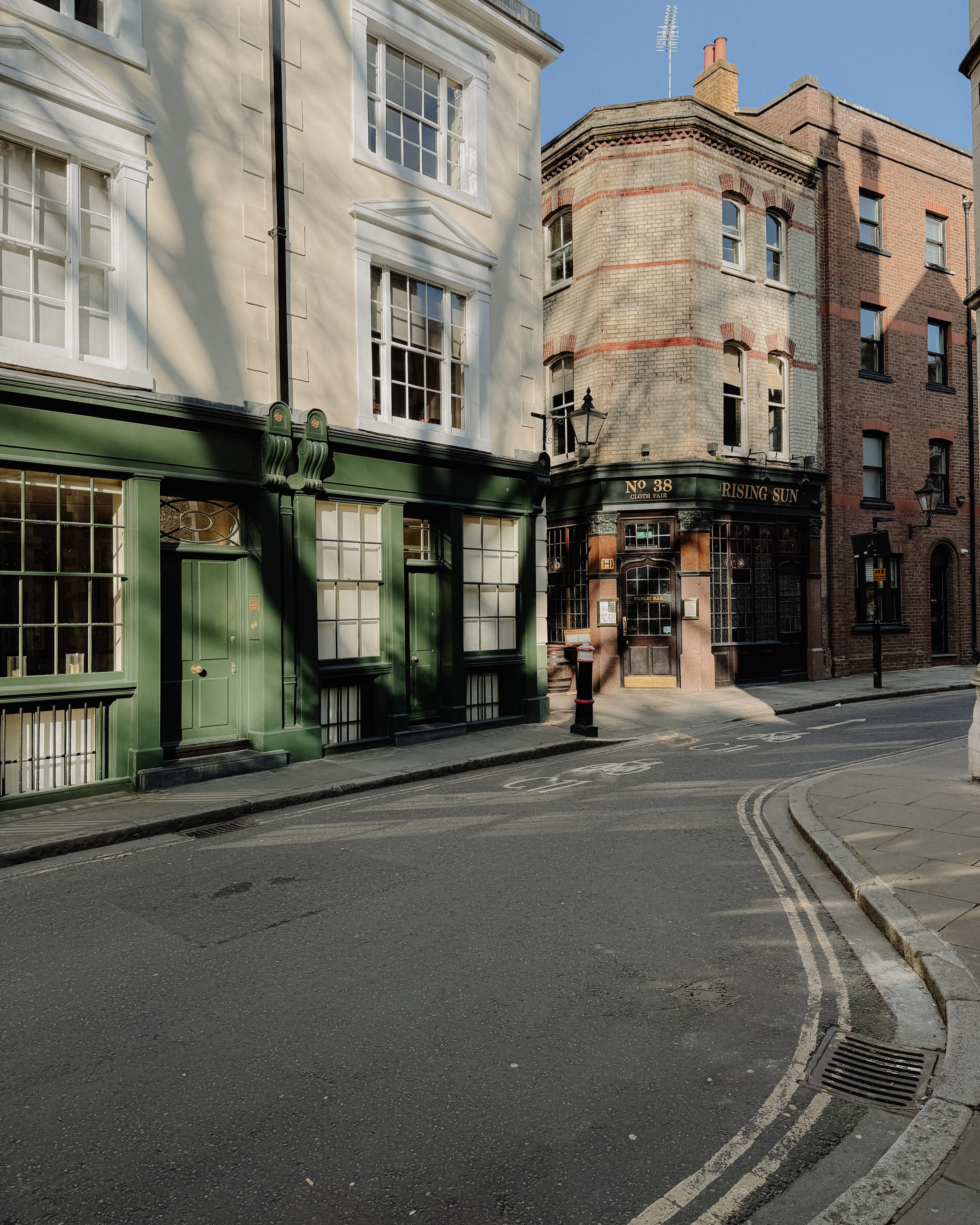
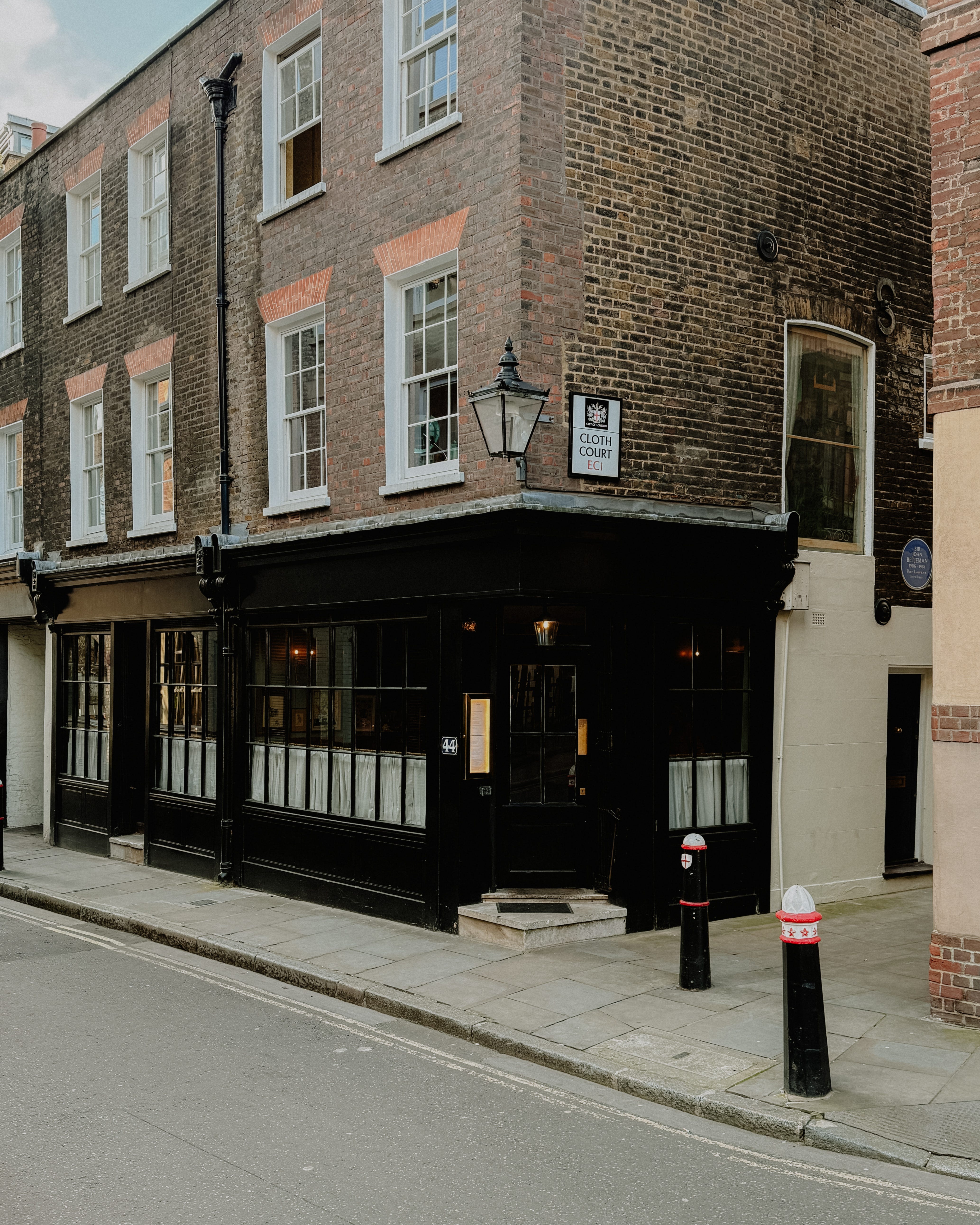
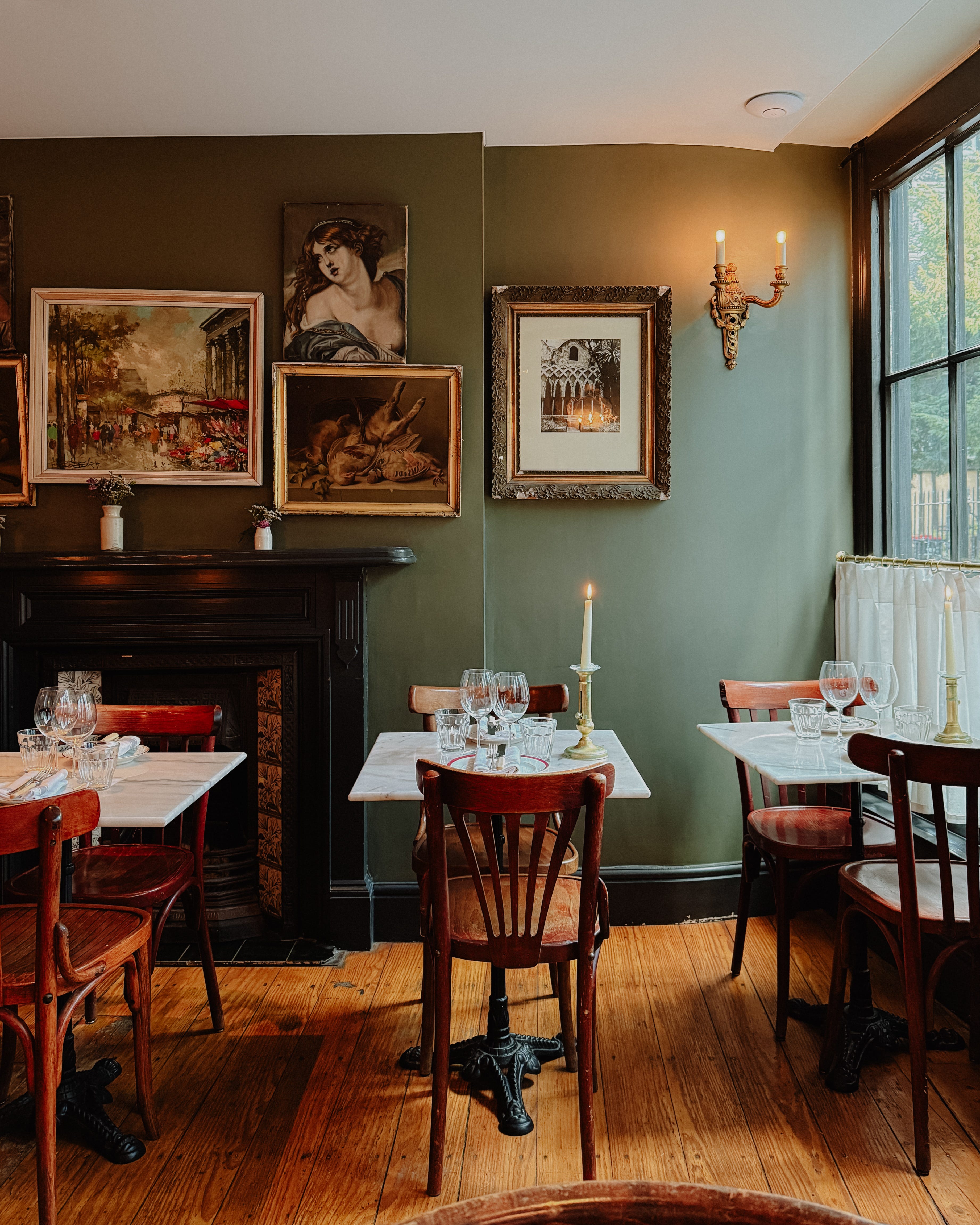
Even the pubs here carry weight. The Rising Sun has served drinkers since the early 18th century, while The Hand and Shears around the corner once hosted meetings of cloth merchants and fair organisers. Their façades, still modest and functional, hint at a working city rather than a curated one. The aptly named Cloth restaurant at number 44 is worth a visit too, with a reasonably priced set lunch and an atmospheric dining room.
Why You Should Visit
Cloth Fair isn’t a showpiece or a stage set. Its appeal lies in how understated it is—a fragment of continuity in a part of the city which also includes Smithfield market (now sadly closed as a working market after many hundreds of years), the Charterhouse and St Bartholomew’s Hospital. Walk around in the early morning or in the evening when the nearby offices have emptied and you can sense the weight of the centuries.
It’s one of the places where you can trace London’s layers—monastic, mercantile, Georgian, Victorian, modern—in the space of a few steps. That quiet endurance is its charm.
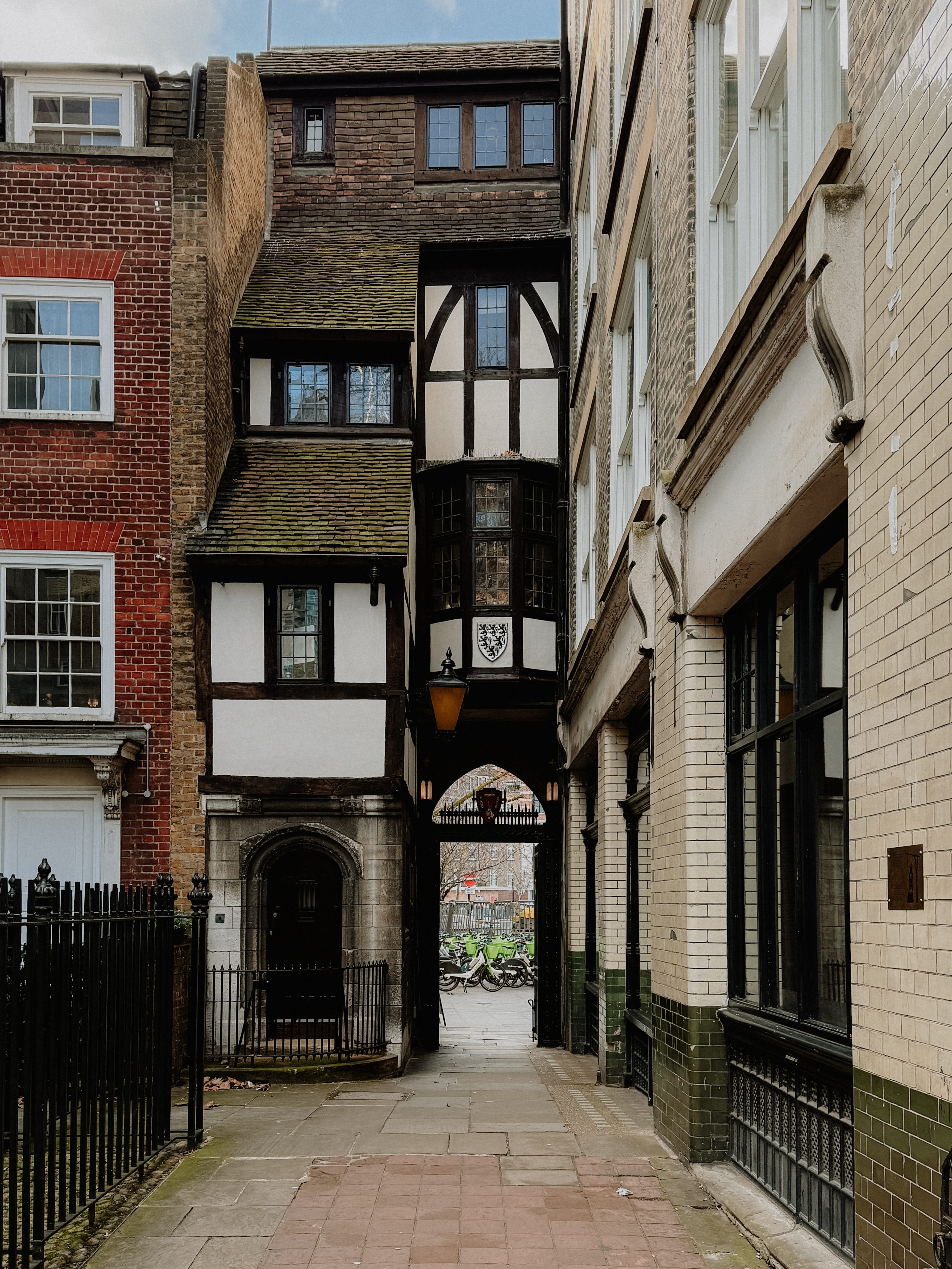
📍 Location: Cloth Fair, City of London EC1A 7JQ
Nearest Tubes: Barbican, Farringdon, or St Paul’s
Tip: Best seen outside of office hours or on the weekend, when the area is much quieter
I stumbled upon St Bartholomew The Great years ago just wandering around London, and only realised the significance must later when I read about it. Wonderful place!
This is so timely - we were just in St Bartholomew the Great over the weekend for an American carols service commemorating 300 year anniversary of Benjamin Franklin’s time there as a printing apprentice. We got there when it was already dark, but I definitely noted the atmospheric surroundings and wanted to return to explore in the daylight! So cool.