

Stepney Green
In search of spring and Stepney Green's oldest house, built in 1694

I can’t lie, it’s been a long, hard and seemingly never-ending winter. Until I moved to this country from Australia, over 20 years ago now, I didn’t really understand the fervour with which people seemed to greet the spring. What’s the big deal? I wondered. Back home, the seasons were so much less marked, but now I feel almost tearful at the thought of longer days, spring flowers, and maybe (although I don’t want to jinx it) an end to the dispiriting rain that seems to have blighted the whole of January and February so far.
I knew I wanted to visit Stepney Green Gardens and write about it for Old World London, because I’ve always loved one particular house on this street, and what I love most about it is that it’s in Stepney, of all places, just moments from Mile End Rd. It’s not a part of London you necessarily think of when imagining beautiful historic pockets, and yet it’s a fascinating remnant of what was once a village on the ancient route heading east out of the City.
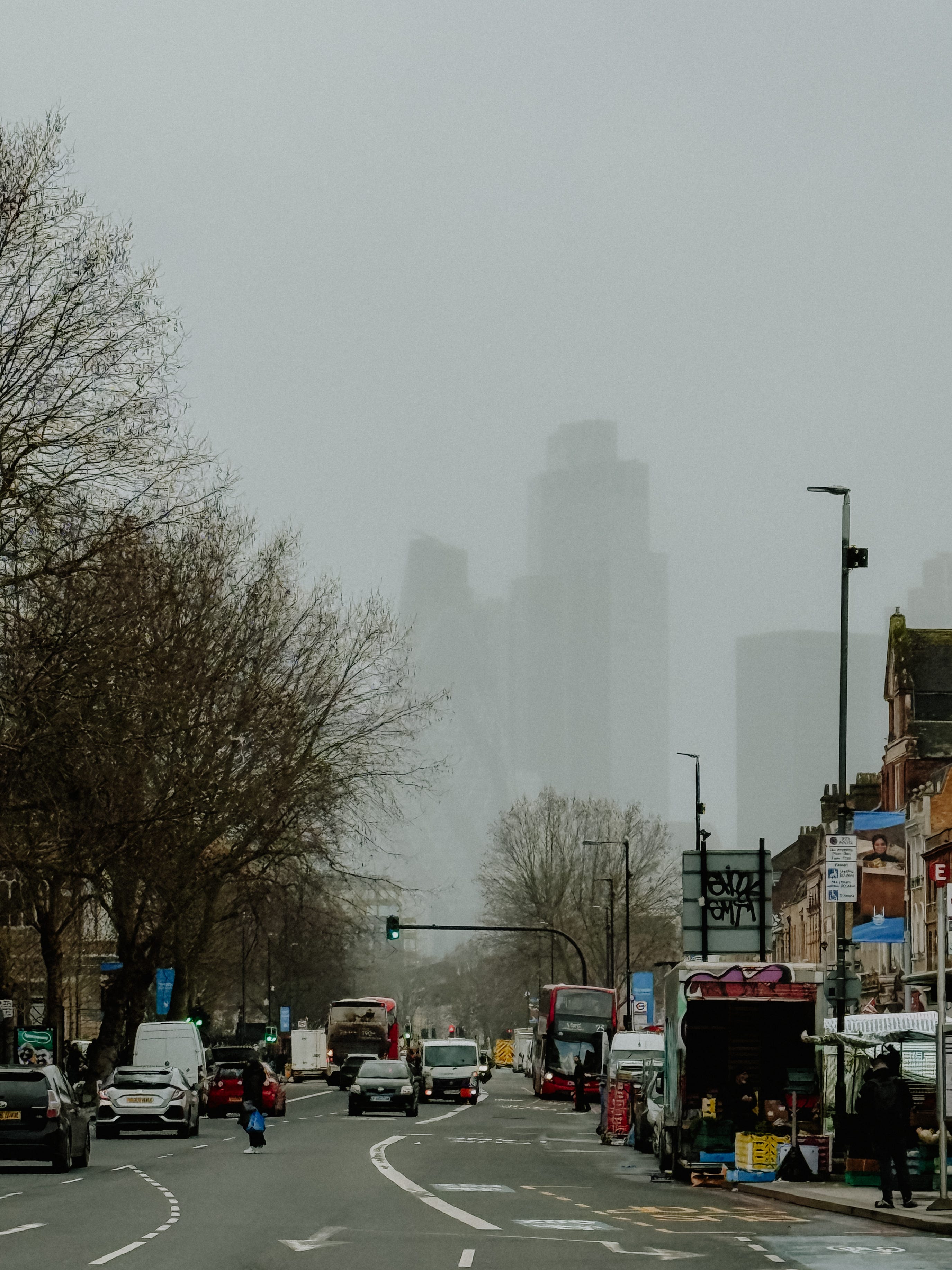
In fact, stand in the middle of Mile End Rd at Whitechapel station looking west and it’s a dead straight line to the City’s skyscrapers. All along Mile End Rd are little reminders of the past, if you know to look for them: the Trinity Green almshouses, built in 1695 in what was once a peaceful rural location, with jaunty their ships cresting the gates—the first buildings to be put on the preservation register would would eventually become the UK’s listed building system—and the handful of beautiful early 18th-century houses midway between Whitechapel and Stepney Green tube stations.
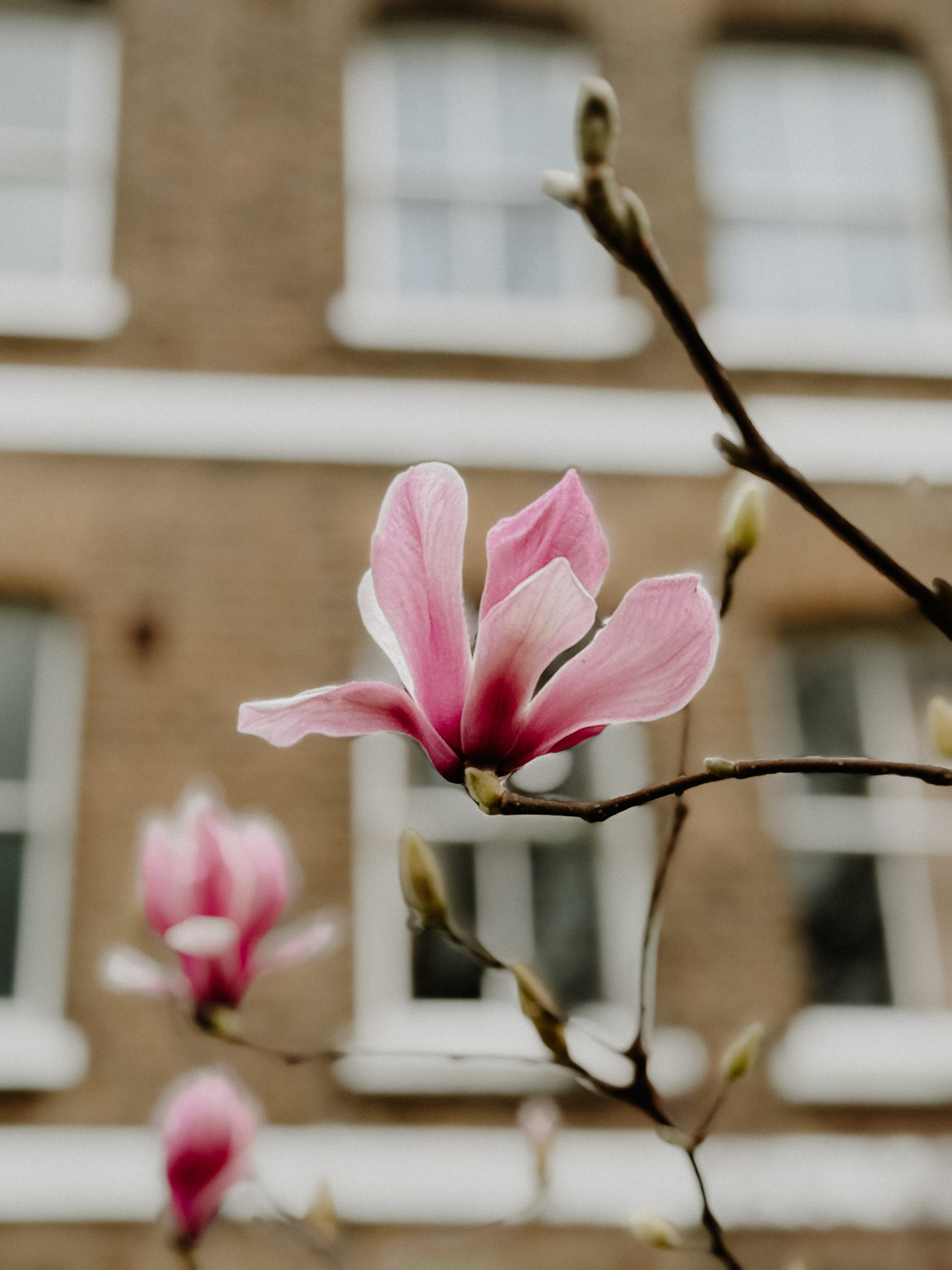
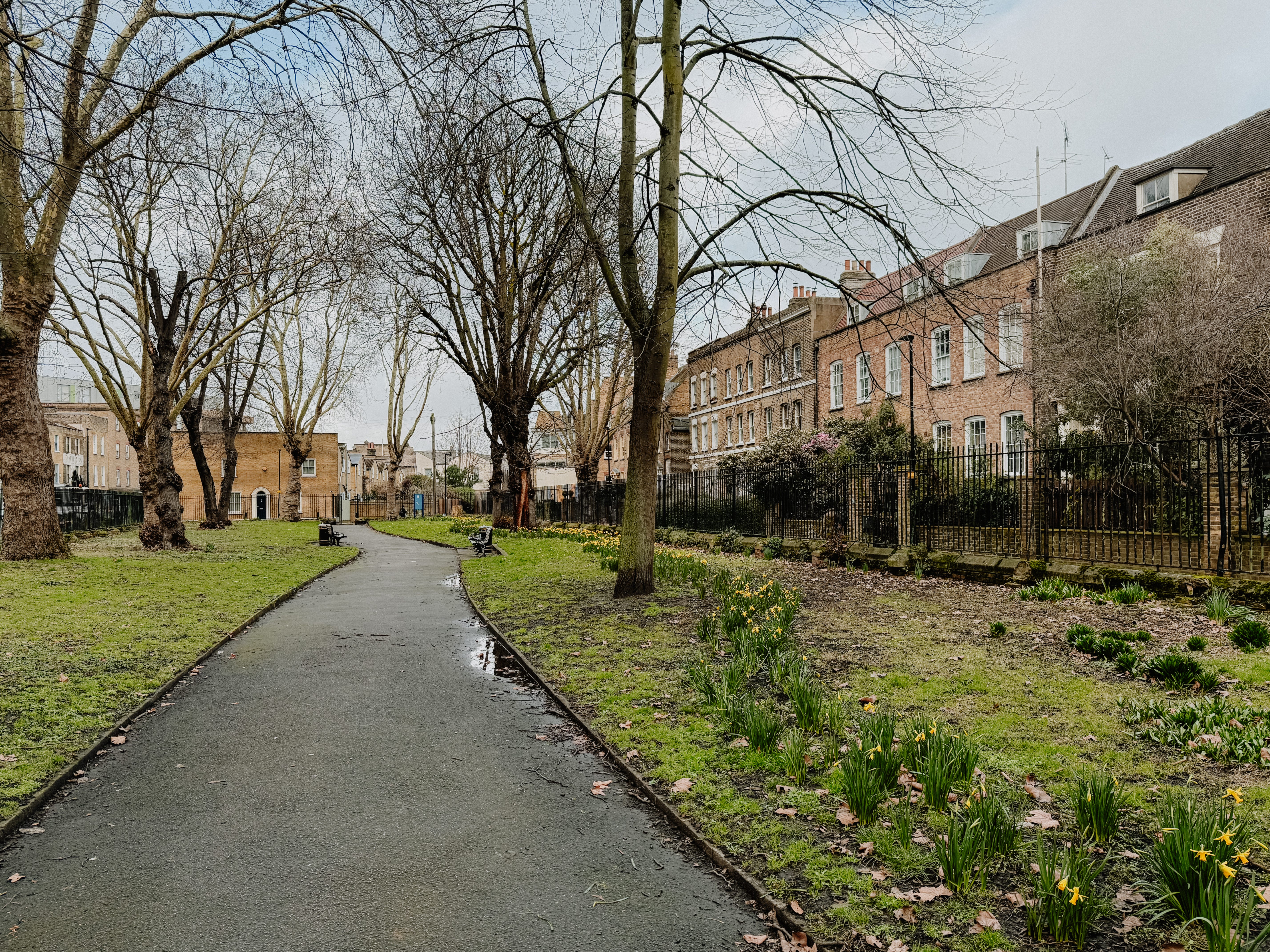
So, off I went to Stepney Green on my way home, and what I found was spring: the first magnolia blooms I’ve seen so far this year, daffodils blooming in Stepney Green Gardens, which run all the way down the middle of Stepney Green, purple crocuses thrusting up jauntily in front gardens, pink flowers on what looked like a winter-flowering cherry tree and dusky hellebores… a sign of better days to come.
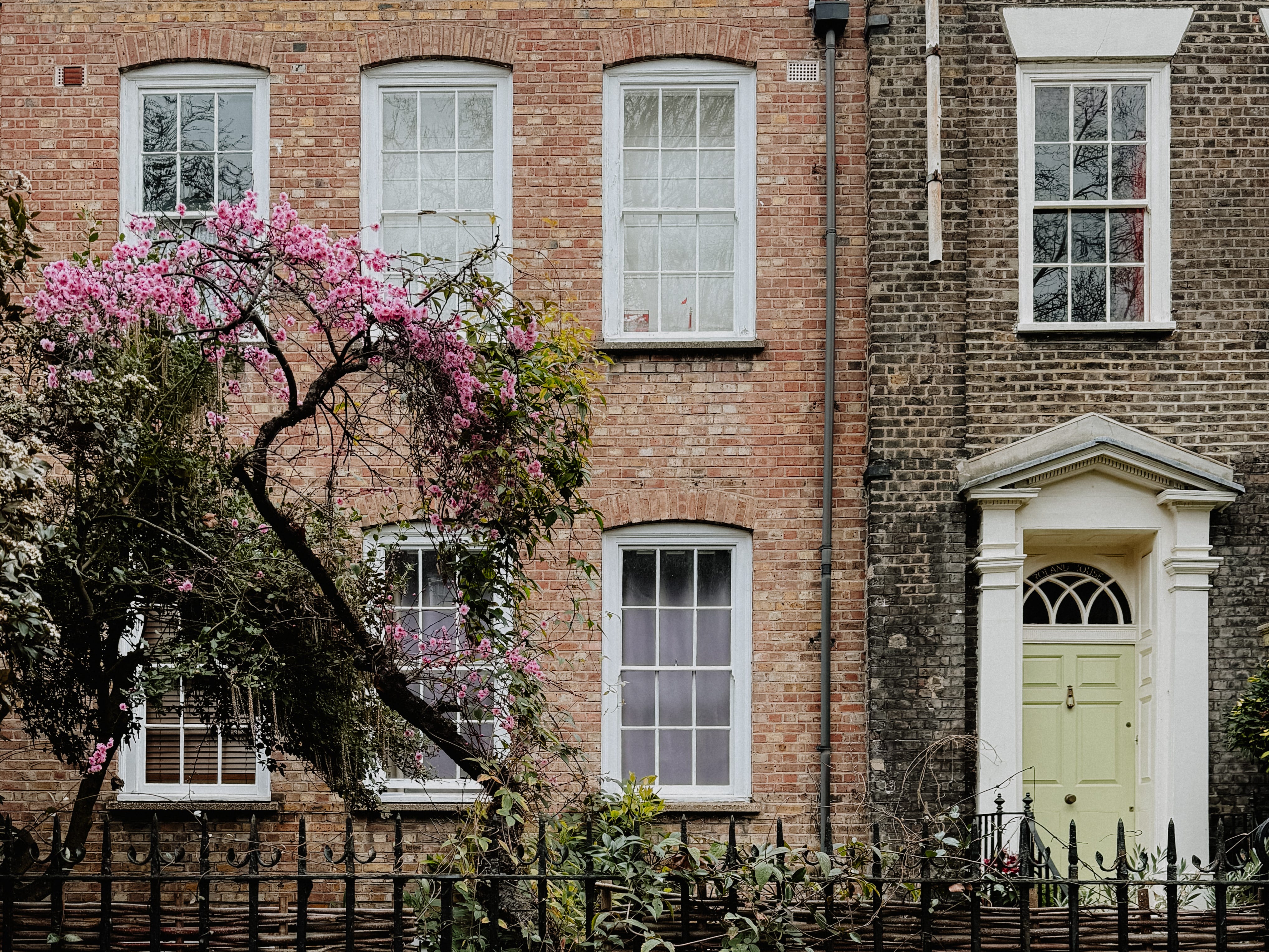
But the history is pretty interesting too. Stepney, or Mile End Old Town as it appeared on early maps, began to be developed in the late 17th century and the large houses built here typically became home to newly wealthy merchants and mariners. Later on, in the 19th century, the area became markedly less well-to-do, as the East End developed in proximity to the Docks and industrial activity progressively intruded into the area.
After many years of decline and subsequent post-war redevelopment, the remaining 17th and 18th-century houses along Stepney Green began to be revived, and open spaces began to be transformed by landscaping. Pevsner wrote in 1952 that ‘… right down to the 19th century it must have been very pretty and peaceful. Now it has lost all its character.’ However, the subsequent restoration of the older houses along this street and the new landscaped gardens that run through its centre, created initially in 1872 from one of the last remaining strips of Mile End Green, have done much to restore the village-like feeling it must once have had. The roadway itself is cobbled with distinctive blue-tinged cobblestones that were originally by-products of the Teesside iron industry.
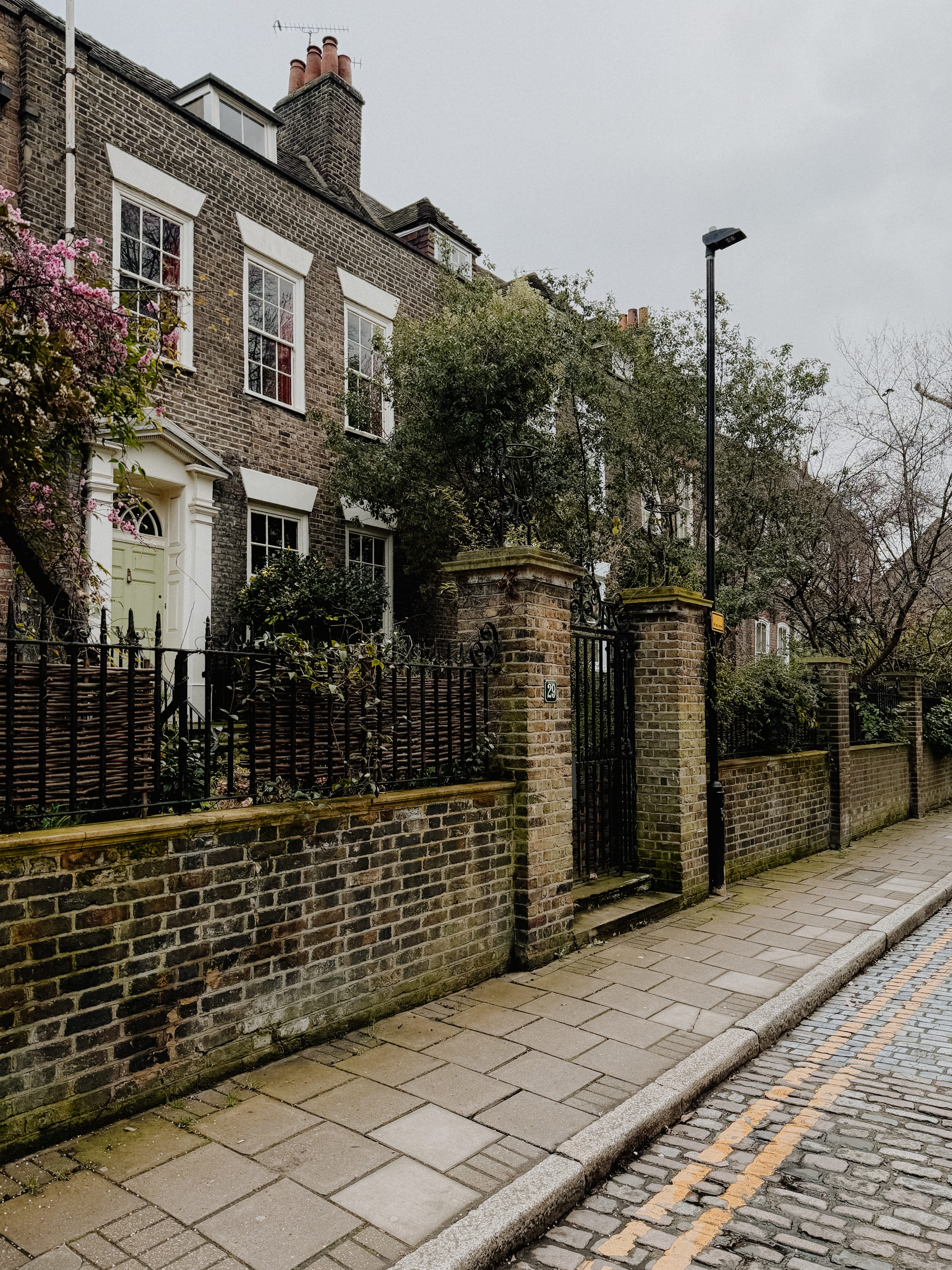
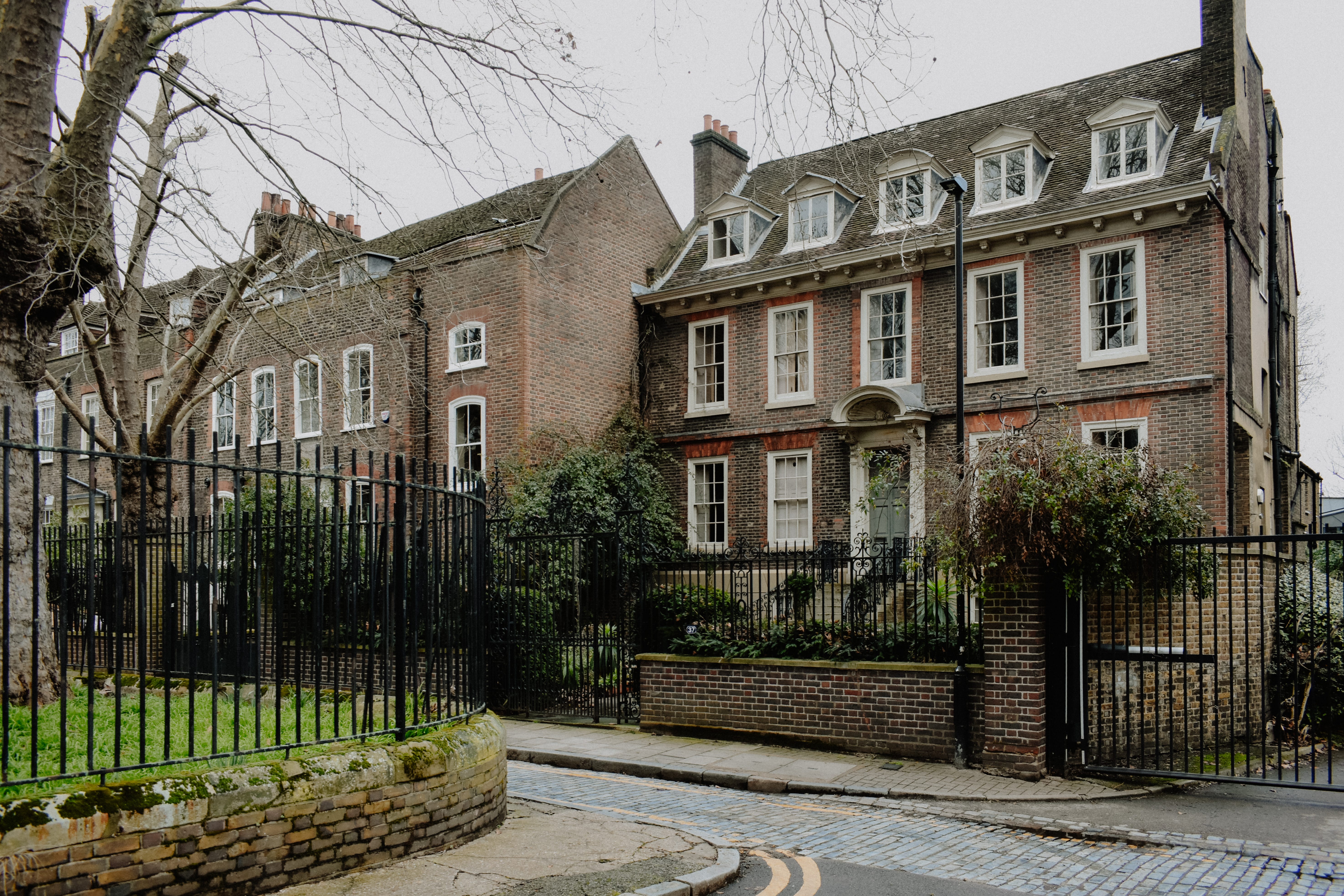
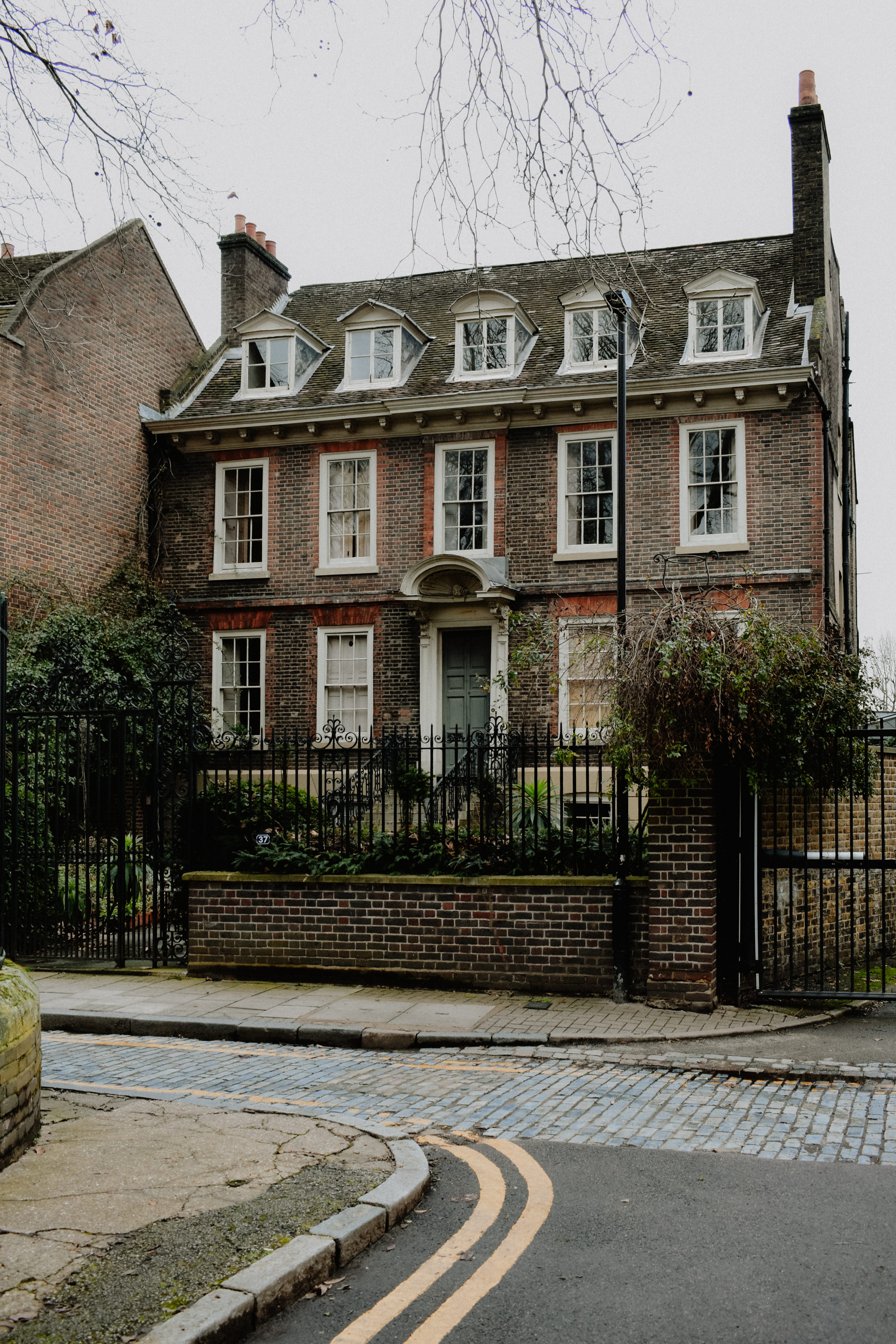
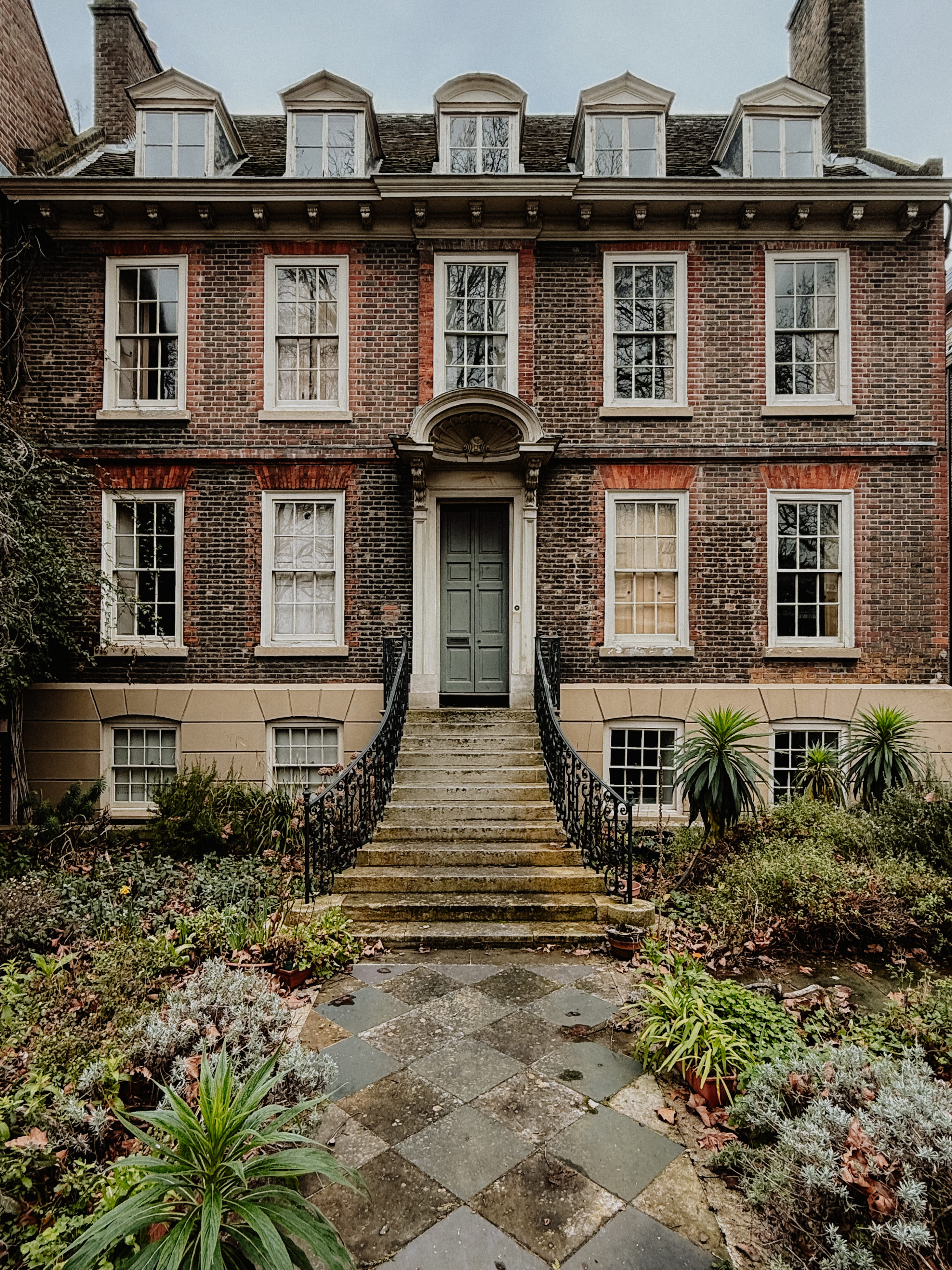
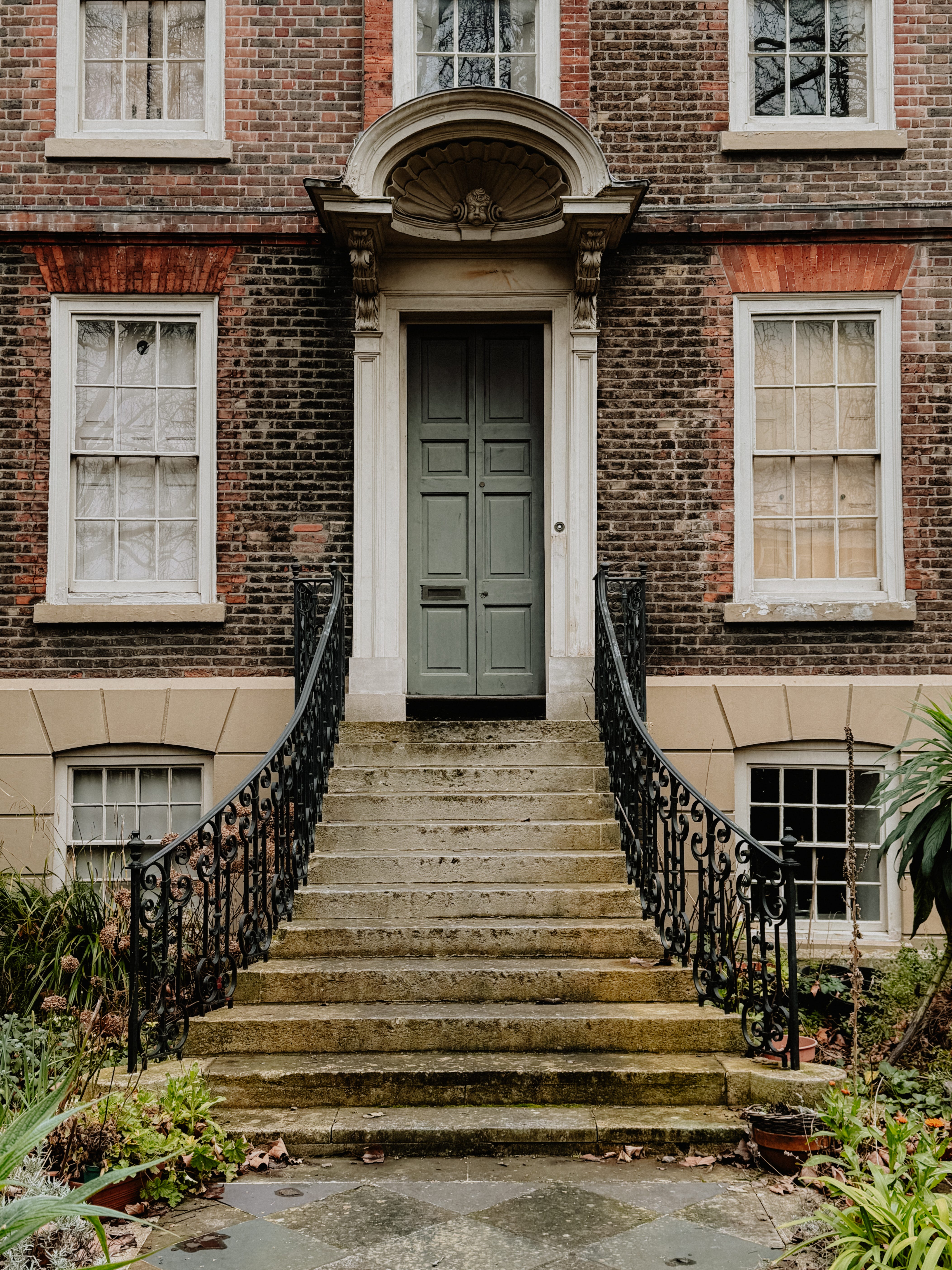
My favourite house, number 37, was built in 1694—the only example left in the area of the smart brick classical houses built in London in the late 17th century. It was built for a wealthy London merchant named Dormer Sheppherd and acquired in 1714 by Mary Gayer, widow of the East India Company’s governor of Bombay—you can see her monogram in the iron gateway that still survives. Its five bays of reddish brick and curved hood over the porch with its scallop shell design are very distinctive; it also has, according to Pevsner, a fine staircase inside (‘worthy of a country house’ no less!), marble fireplaces and wooden panelling. The house was used as a filming location in the TV series Taboo, starring Tom Hardy, where it was used for the Delaney house. The house was subdivided in around 1853 and later used as an aged care home before returning to private ownership in 1998.
Why You Should Visit
Stepney Green is a mish-mash, like so much of London. Clusters of fine 17th and 18th-century houses sit cheek by jowl with modern infill brick houses, 19th-century tenement housing (the Rothschilds funded two large apartment blocks for Jewish artisans here in 1895) and terrace housing. The result is not beautiful, exactly, but it’s interesting—you can trace the history of the area and its inhabitants from what has survived of them across the centuries. It’s not the pristine London of postcards or Instagram posts, but it’s rich in history and interest for those who go looking.
📍 Location: Stepney Green, E1
Nearest stations: Stepney Green or Whitechapel
Tip: Combine with a trip to the Whitechapel Gallery and while you’re there, get a bite to eat at Tayyabs on Fieldgate St.
Stepney Green is a real and unusual gem. It doesn't feel like London. No. 37 is the sort of house that you would expect to find in a market town in Wiltshire. Walk south west of Stepney Green and you will come to St Dunstan's, a late mediaeval church which was for centuries the 'mother church' for the whole of the East End. Well worth a visit.
I would love for a series of A House Through Time (David Olusoga for the Beeb) on this house! I’ll pop along when the weather gets a bit better, I’m still in hibernation mode currently